A species · Plant
Mistletoe
The much-maligned parasite of the gum trees, planted branch by branch by its own dedicated bird — and generous enough, in flower and fruit, to feed and shelter a startling share of the bush's animal life.
- On the gradient
- A rider on the whole gradient rather than a resident of one rung — found wherever mature eucalypt woodland survives, from plains remnants to the summit forest
- Rock
- Weathered basement rock of the Mount Lofty Ranges, under mature eucalypt woodland — though the ground itself barely matters to this plant
- Soil
- None, in the ordinary sense — mistletoe draws its water and minerals from the host tree's own xylem, not from the earth beneath it
Locate this place on the map →
What you'll take away
- Identify mistletoe as a hemiparasite — a plant that keeps its own green, photosynthesising leaves but taps the host eucalypt's water and minerals through a haustorium sunk into the branch, rather than a full parasite, an epiphyte, or a sign of disease.
- Explain why mistletoe counts as a keystone resource: its nectar-rich flowers, berries and dense cover support a share of the region's animal community far out of proportion to a single hemiparasitic plant (Watson 2001).
- Connect mistletoe's own honeyeater-visited flowers to the wider bird-pollination partnership running through the Adelaide bush, and its berries to a dedicated planting bird, and read a dense clump overhead as evidence of that partnership at work rather than damage to be lopped out.
Look up into an old eucalypt almost anywhere from the plains remnants to the summit forest, and sooner or later a dense, faintly untidy ball of foliage will be hanging off one of the branches, looking for all the world like a crow’s nest that never quite fell apart.
It is mistletoe, and it has made a decision most plants never dare to make.
It still runs its own leaves, green and photosynthesising, manufacturing its own sugar exactly as any honest tree does.
But it has given up entirely on drawing its own water and minerals from the ground, sinking a root-like structure called a haustorium straight into the host branch’s plumbing instead, and drawing on the tree’s supply of both while paying none of the usual cost of root or soil.
That makes it a hemiparasite — half thief, half honest tenant — and for most of the history of European settlement here that was reason enough to call it a pest and reach for the loppers.
The theory turns out to be badly incomplete.
A worldwide review of the evidence found vertebrates from ninety-seven families feeding on mistletoe and fifty families nesting in its dense, sheltering clumps — an improbable amount of animal life propped up by a single group of hemiparasitic plants (Watson 2001).
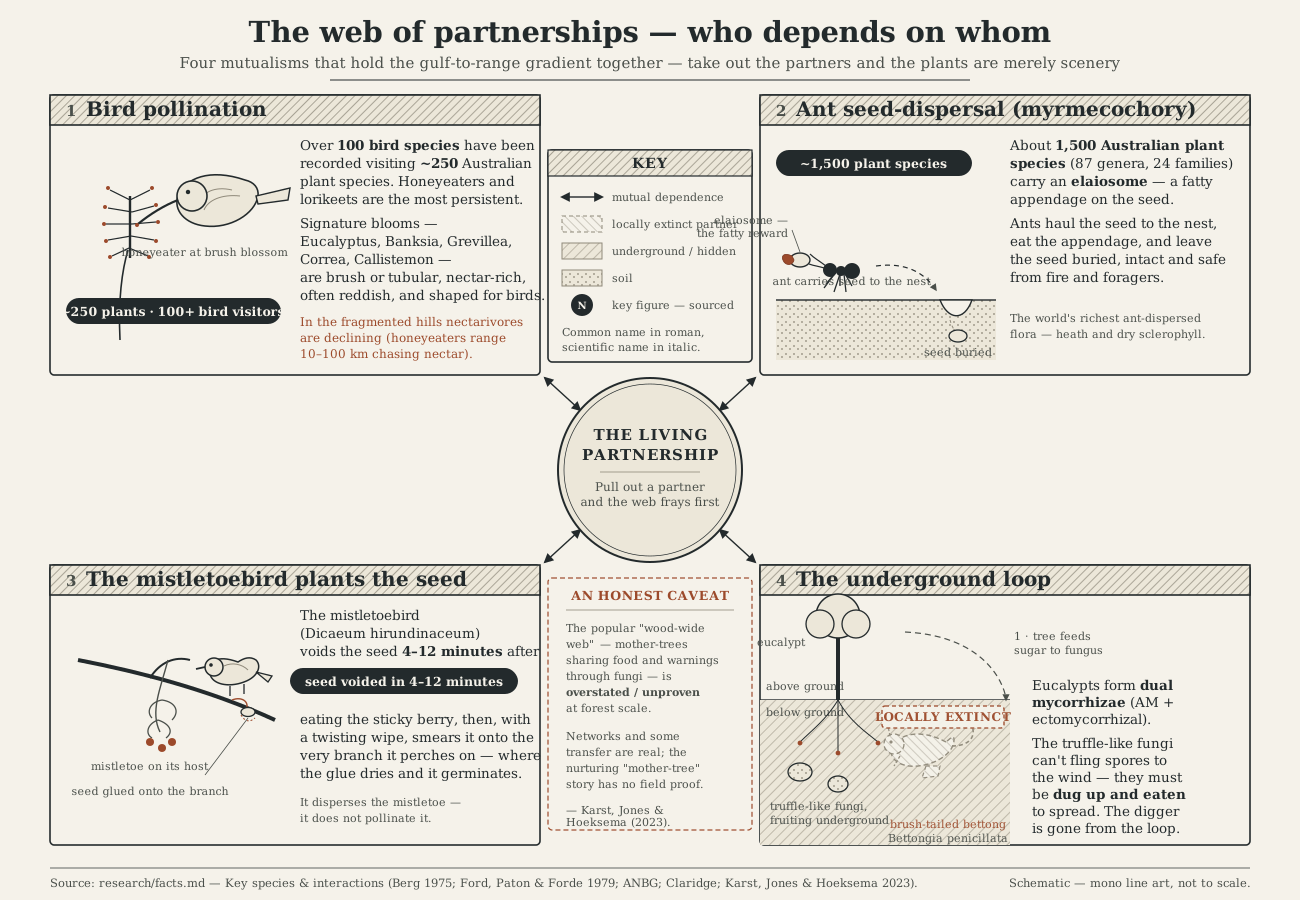
Around Adelaide the mistletoe pays its way twice over: nectar-rich flowers that draw honeyeaters into the same bird-pollination economy that runs through the grevilleas and the gums (Ford & Paton 1986), and sticky, fatty berries that feed a small dedicated specialist, the mistletoebird, more or less exclusively.
That bird does something remarkable with the seed once it has eaten the fruit — voiding it fast and wiping it directly onto the branch it is perched on, planting the mistletoe’s next generation with its own body, a partnership precise enough to deserve a unit of its own.
Between the flower and the fruit, mistletoe manages something rare in a summer-drought country: fruiting and flowering through the very months when little else in the woodland has much to offer, and providing, in its own tangle, one of the thickest hiding-and-nesting shelters going in an open eucalypt canopy.
So read that dark clump overhead less as a wound in the tree, and more as a small, crowded apartment block — proof that a plant with no real interest in soil can still end up feeding, and housing, half the woodland around it.
Go deeper — the mechanism & the evidence
Watson's (2001) global synthesis is what turned mistletoe from horticultural pest into a recognised keystone resource, and the case rests on scale rather than anecdote: across the world's mistletoe literature, vertebrates from ninety-seven families were recorded feeding on some part of the plant — nectar, fruit, foliage — and fifty families nesting inside its dense, wind-sheltered clumps, spanning birds, mammals and invertebrates on every continent mistletoe reaches. The offer works because mistletoe is a hemiparasite rather than a true parasite: it never surrenders its own capacity to photosynthesise, so the plant still manufactures its own sugars, and what it draws through the haustorium sunk into the host branch is water and dissolved minerals only — resources a summer-drought eucalypt is already working hard to secure for itself. That borrowed water is also why a mistletoe clump can keep flowering and fruiting through the leanest, driest months of the year, when the host tree itself is conserving rather than growing — a lean-season larder riding on someone else's plumbing.
Sources for this guide · 2
Every claim here is traceable. Each citation links to its entry in the bibliography.
- Watson, D.M. (2001). Mistletoe - a keystone resource in forests and woodlands worldwide. Annual Review of Ecology and Systematics 32:219-249. https://doi.org/10.1146/annurev.ecolsys.32.081501.114024 — Mistletoe as a global keystone resource — the tally of vertebrate families feeding on and nesting in it.
- Ford, H.A. & Paton, D.C. (eds) (1986). The Dynamic Partnership: Birds and Plants in Southern Australia. Handbooks of the Flora and Fauna of South Australia. Adelaide: Government Printer. https://www.abebooks.com/book-search/title/dynamic-partnership-birds-plants-southern-australia/author/h-a-ford-d-c-paton/ — The southern-Australian bird-and-plant economy that mistletoe's own nectar flowers belong to.
Concepts this teaches — follow a thread
More guides like this
Adelaide rosellaBanksiaBrush-tailed bettong (woylie)Common brushtail possumGrasstree (Xanthorrhoea)Greater bilby (the lost suburbanite)
Part of these pathways
Test yourself →
A dense, untidy ball of foliage hangs from a branch high in an old eucalypt — mistletoe. Its own leaves are green and clearly photosynthesising, yet a haustorium sunk into the branch is drawing on the tree's own water and minerals. What kind of plant does that make it, and what should you do about the loppers?
Mistletoe keeps its own green, photosynthesising leaves and only draws water and dissolved minerals through the haustorium — that half-and-half arrangement is exactly what 'hemiparasite' means, distinct from a true parasite (no photosynthesis of its own), an epiphyte (which takes nothing from its host), or disease. A worldwide review found vertebrates from ninety-seven families feeding on mistletoe and fifty families nesting in its clumps, which is why the old reach for the loppers is the wrong response (Watson 2001).